Amba Jamir at Nagaland University: Tourism Must Answer to Customary Land Law
At a Lumami seminar, the policy analyst argued that Northeast ecotourism fails when it overlooks the community institutions, tenure systems and food economies it depends on.
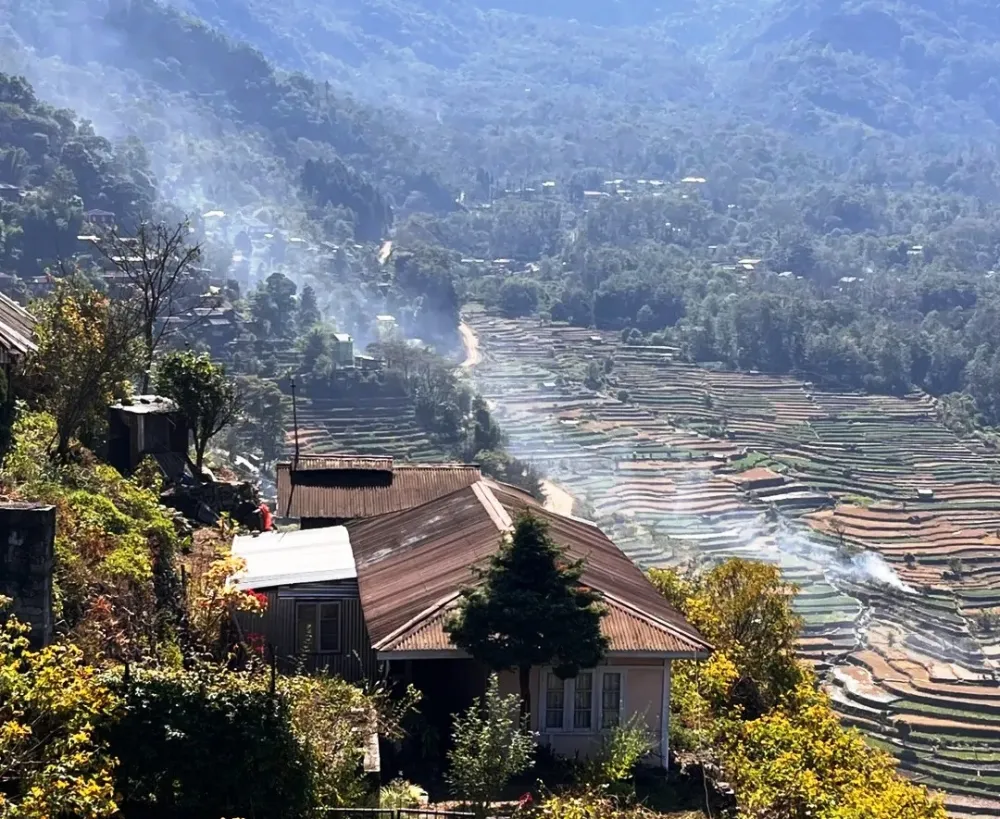
Tourism in Northeast India must be governed as a question of land, assets and culture, not treated only as a revenue opportunity, policy analyst and development strategist Amba Jamir told an international seminar at Nagaland University in Lumami on Thursday. His warning was direct: projects that ignore community institutions and ecological systems built over generations can leave lasting damage.
Jamir spoke during the two-day seminar on "Ecotourism, Livelihood and Development in Northeast India," held on November 19 and 20. The Departments of Sociology and Geography organised the event, which drew academics, policymakers, tourism practitioners and community representatives. His lecture was titled "Governing the Living Commons: Anchoring Ecotourism in Customary Tenure, Agrobiodiversity, and Indigenous Food Systems."
The constitutional argument sat at the centre of his talk. Jamir pointed to Article 371A in Nagaland and the Sixth Schedule provisions elsewhere in the region, under which communities, not the state, hold land. Tourism, he said, has to operate inside that framework. He rejected the image of the region's hills as empty or pristine, describing them as lived-in landscapes run by overlapping community institutions.
He proposed four questions for every community and investor before a project is approved: who decides, who invests and why, why the project is coming and for whom, and what happens if it fails. Funding source, whether government, corporate social responsibility or an NGO, should not decide who holds authority, he said. He added that village councils are not the only institutions that matter, since clans, kinship groups and extended families often own the land. On failure, he noted that investors and departments may close the file with a report on financial and physical targets while communities inherit the upkeep of the assets.
Jamir framed the "living commons" as three linked dimensions: customary tenure, agroecological spaces, and epistemic sovereignty with social norms. Tourism is sustainable, he said, only when it strengthens all three. On tenure, he identified elite capture by people with access to schemes and power as a major internal threat, and said communities often struggle to turn down government schemes for fear of exclusion later. He also cautioned that tourism can deepen inequity, with households holding better views drawing more attention and investment.
On agroecology, he said forests, rivers and mountains that look unproductive are in fact old food systems. Shifting cultivation cycles create a mosaic of forest plots of different ages, and he said that system should not be disturbed. Tourist seasons often coincide with peak work periods in forests and fields, particularly for women, while hunting bans and seasonal restrictions overlap with popular hiking trails. Food tourism, he said, poses one of the biggest risks to indigenous food systems, so the cultivation systems, kitchen gardens and forests that supply the food need protection.
He also criticised the habit of building infrastructure before institutions are ready to run it. He asked how many traditional councils and community members have been trained in tourism management, planning and visitor engagement, and how many have benefit-sharing mechanisms that ensure equity. Without that groundwork, he said, tourism risks causing friction within villages and becoming a project of a few. Source: Morung Express.