Ahuna festival at Suruhuto turns harvest rite into Sümi-Yimkhiung unity pitch
Speakers at the Ahuna-cum-Mini Hornbill Festival used the Sümi harvest celebration to press for reconciliation, self-reliance and fair sharing of development packages.
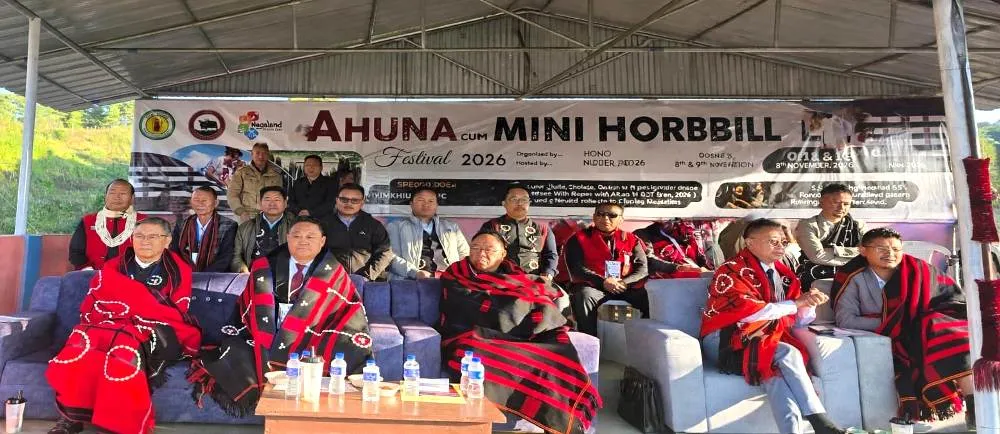
The Ahuna-cum-Mini Hornbill Festival at Suruhuto brought Sümi and Yimkhiung leaders together for a cultural exchange. Speakers used the platform to call for unity among Naga communities and to urge a shift from old grievances to future planning.
One speaker, identified in the source only as Aye, set the tone. He said Naga society should stop revisiting the past and start preparing for the challenges ahead, calling unity "our only hope." He argued that peace and reconciliation are preconditions for wider progress, and urged stronger villages, communities and tribes.
Aye also raised alarm over alcohol, drugs and other anti-social activity among young people. He asked families, churches, community organisations and public leaders to act jointly to rescue affected youth. He then turned to livelihoods, urging people to value the dignity of labour, honesty and hard work. In his view, communities should lean on agriculture and other productive work rather than depend heavily on government welfare schemes. He also asked Naga communities to look beyond tribal interests, and, citing the Eastern Nagaland People's Organisation (ENPO), called for sincerity in distributing economic packages fairly among tribes and ministries.
The festival's historical thread ran through the remarks of two advisors. S Keoshu Yimchunger recalled the Naga political movement of the 1950s and 1960s, when, he said, the Yimkhiung faced hardship and the Sümi offered protection and help. He described the bond as one forged in shared sacrifice, not a formal association. S Kiusumew Yimchunger said the relationship had deepened over generations through understanding and mutual acceptance. Marking his first visit to Suruhuto, he said exchanging gifts at such events symbolises oneness and belonging.
Sümi Hoho president Dr. Vihuto Asumi described Ahuna as one of the Sümi people's most cherished festivals, marking the end of the agricultural season and the gathering of the harvest. He called the Sümi-Yimkhiung Cultural Exchange the highlight of this year's edition and traced the friendship between the two communities to the 1930s.
Other leaders echoed the message. Deputy Speaker S Toiho Yeptho praised the organisers and hoped the friendship would grow through unity and cooperation. Western Sumi Kukami Hoho president Akükatou Khehovi Chophi said the gathering could strengthen relationships and bridge gaps. Western Yimkhiung Hoho president H Akiumong Yim called the relationship unique and urged both sides to shield it from outside considerations. Earlier, Yimkhiung Tribal Council president Throngso Yimkhiung unveiled a commemorative plaque to open the exchange programme.
The event shows how festivals in the region double as venues for inter-community diplomacy, with a harvest ritual carrying appeals on social problems, economic fairness and political cohesion. Source: Eastern Mirror Nagaland.