Magh Mela 2027: Prayagraj Raises Power Budget to ₹21.19 Crore
With the fair ground growing to 990 hectares, the electricity department is building a larger temporary grid, while transport and telecom plans scale up in step.
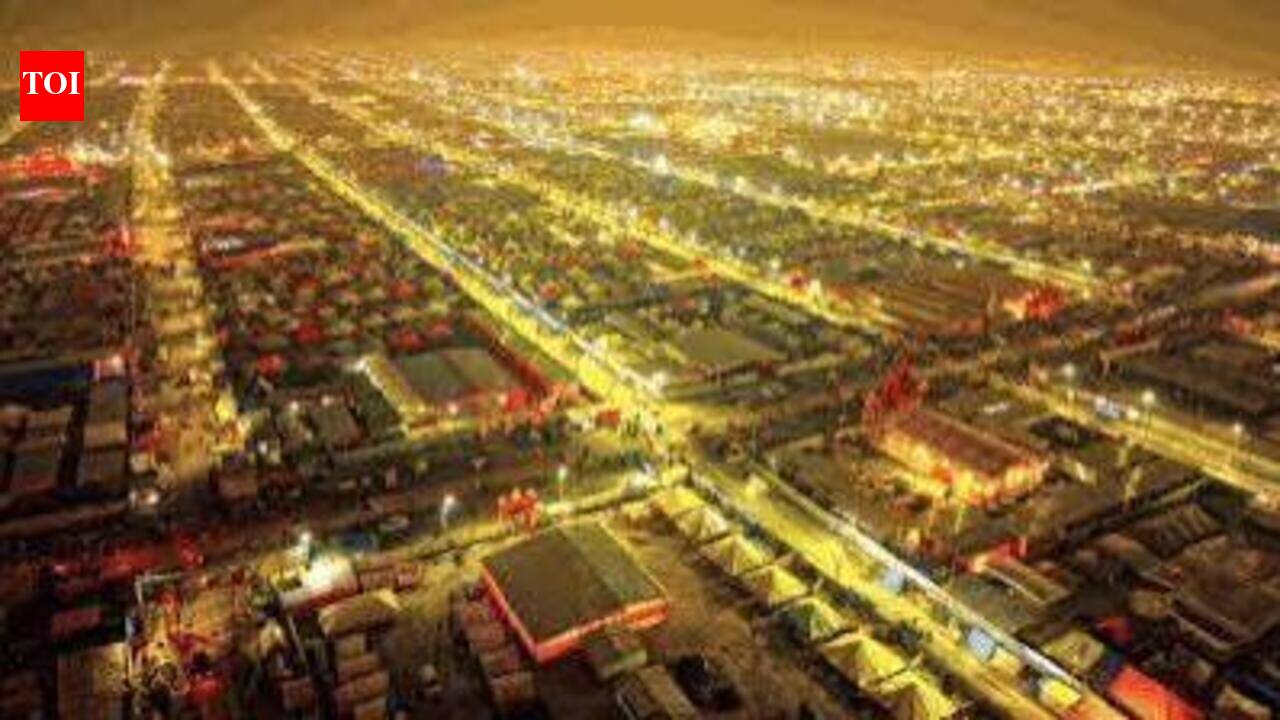
Prayagraj's administration has set aside ₹21.19 crore for electricity at Magh Mela 2027, up from ₹15.32 crore last year, to light and power a fair ground that has grown from 900 to 990 hectares. The increase of nearly ₹6 crore funds a larger temporary network than the one built for the previous edition.
The electricity department plans to put up 23,120 poles, 27,500 LED street lights and 600 solar hybrid lights. The mix shows the priorities: broad, continuous illumination across the pilgrim camps and approach roads, with solar hybrid units adding a measure of resilience at selected points.
The distribution backbone is equally substantial. Officials will install 67 temporary substations, of which 30 are rated at 400 kVA and 37 at 100 kVA. Feeders increase to 15, and crews will lay 415 circuit km of low-tension lines and 60 circuit km of high-tension lines. Seven ring main units will improve how power is routed and restored if a section fails.
For contingencies, 32 diesel generator sets will be deployed. Five sub-divisional officers and eight junior engineers are assigned to operate and monitor the temporary network through the fair, giving the department a defined supervisory chain for a grid that exists only for a few weeks.
Transport is scaling up alongside. Regional manager Ravindra Singh of the Uttar Pradesh State Road Transport Corporation said the bus fleet for the mela will rise from 2,400 to 2,800. Some 300 of these will stay in reserve for the major bathing days, especially Mauni Amavasya, when crowds peak. Work on temporary bus stations has begun.
Communications form the third pillar. Divisional Commissioner Dr Lokesh M reviewed preparations at the mela authority office on Friday and directed officials to ensure adequate network capacity. All major telecom operators will be asked to install towers so that mobile and calling services hold up under heavy load.
Taken together, the plans show how a temporary city's reliability depends on linked systems: power, mobility and connectivity. The real test will come on peak bathing days, when demand on all three rises at once. Source: Times of India.