BRO defends Sheshnag track widening as Kashmir voices cry ecological foul
The Border Roads Organisation says its post-Yatra work near Sheshnag Lake follows safety and environmental norms, as activists, clerics and politicians question the machinery in a fragile glacial zone.
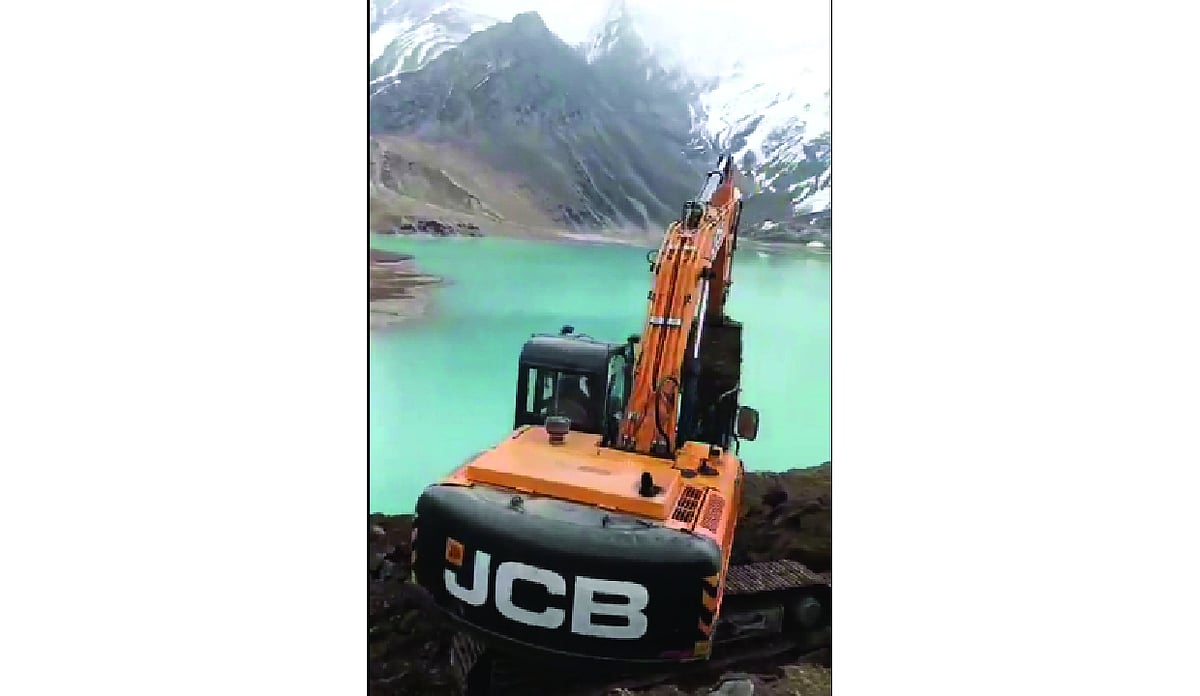
The Border Roads Organisation (BRO) on Monday rejected claims that it is carrying out destructive new construction along the Amarnath Yatra route near Sheshnag Lake. It said the post-Yatra work complies with safety norms and environmental safeguards. The statement followed a social media campaign on Sunday, in which Kashmir-based climate activists circulated video clips of heavy machinery operating in the high-altitude zone.
The BRO said it disposes of excavated material safely, protects natural drainage and keeps disturbance to the surrounding terrain to a minimum. It described the circulating videos' claims of new works as incorrect. According to the agency, it began widening the tracks after reviewing the experience of the previous Yatra and the need, flagged to it, for a wider road for pilgrims. It said the work focuses on stabilising vulnerable stretches.
The dispute turns on a question the BRO's statement does not settle in the portions available: what counts as routine track maintenance in a glacial landscape, and what counts as new construction. Activists argue that any excavator work near a high-altitude lake carries risk. The agency's position is that the work is corrective and safety-driven.
Critics came from across the spectrum. Climate activist Dr Raza Muzaffar Bhat asked how such heavy machines reached Kashmir's glaciers. Kashmir's chief cleric, Mirwaiz Umar Farooq, called the visuals disturbing. He said Kashmir welcomes Yatra pilgrims and has never opposed better facilities for them, but not at the cost of a fragile ecosystem. He cited retreating glaciers and recent glacier-related floods in Nepal, and demanded that the work stop immediately.
Congress MP Pawan Khera, an AICC member, called the work "ecologically and religiously ridiculous" on X. He said Sheshnag is among 14 high-risk glacial lakes identified in Jammu and Kashmir, and that it is sacred to both Hindus and Muslims. He asked Environment Minister Bhupender Yadav to intervene. He also wanted the BRO to disclose its environmental clearances, commission an independent assessment by glaciologists and environmental experts, and say who authorised the work.
PDP spokesperson Mohit Bhan framed the issue as one of faith as much as ecology. He said Sheshnag is not just another mountain lake, and that faith and ecology are not competing interests.
The row shows how pilgrimage infrastructure, Himalayan hazard and local politics now collide. The BRO's assurances are on record, but the demands for published clearances and an independent glaciological review remain unanswered in the material available. Those documents would decide whether the clarification ends the controversy or deepens it.