Leader's 'crime exists but no criminals' remark sparks confusion and online mockery
A political leader's claim that his region has crime but no criminals has drawn rivals' attacks and memes, and left many voters unsure what he meant.
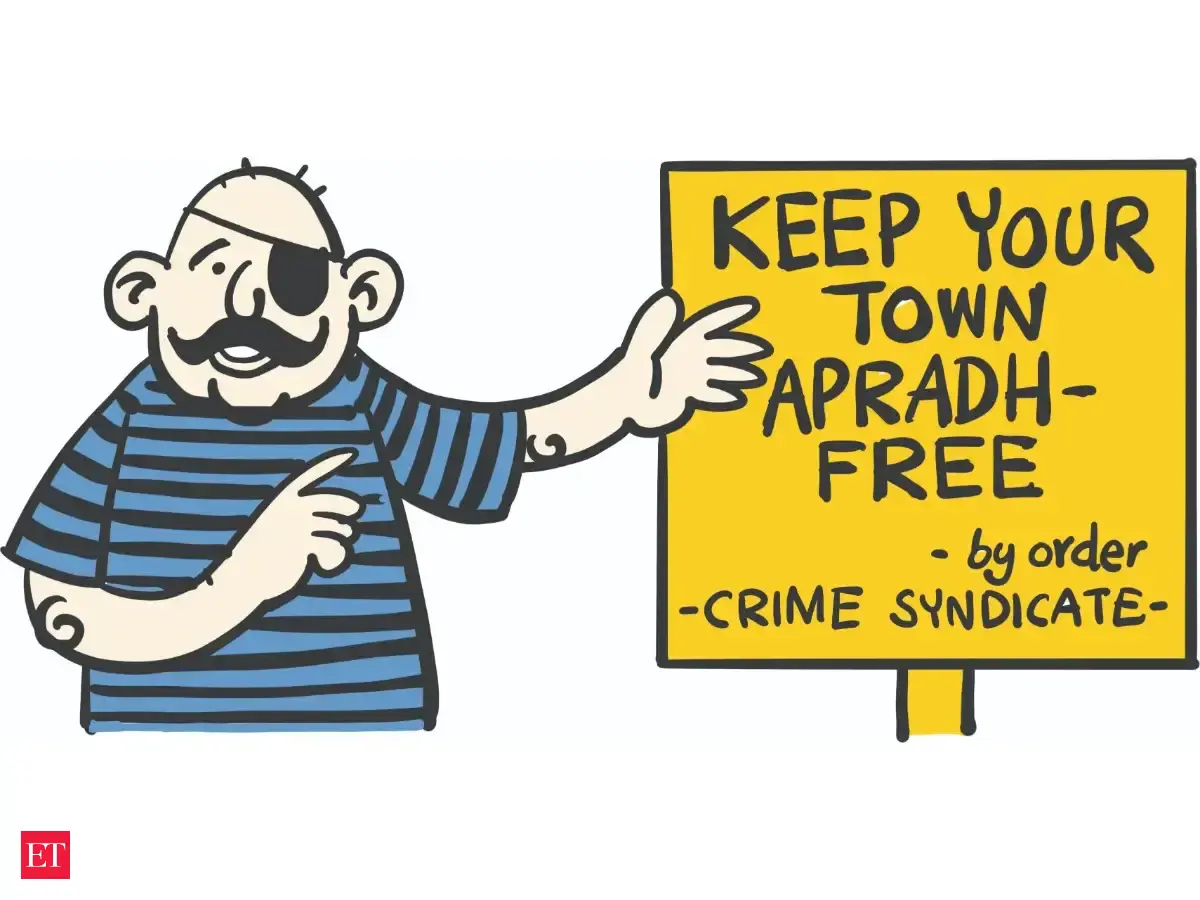
A political leader's recent remarks on crime have left the public puzzled, with the central claim that his region has offences but no offenders. He argued that the concept of criminality has effectively ended there, while acknowledging that criminal acts can still occur. Political opponents have seized on the line, and it has quickly become a fixture of social media discussion.
The difficulty lies in the logic. In everyday Hindi and English, the words for a crime and a criminal are closely tied: a crime is an offence, and a criminal is the person who commits it. Separating the act from the actor, as the leader appeared to do, is not a distinction that ordinary usage supports. Listeners are left to guess whether he meant that offences are rarely punished, that particular groups are not labelled as offenders, that official records are being contested, or something else entirely.
That ambiguity matters in a region where questions of policing, prosecution and public safety carry direct consequences for residents. A statement that can be read as either a reassurance or a dismissal of victims' complaints invites suspicion from opponents and confusion from citizens. Without a clarification that defines terms and points to evidence, the remark risks becoming a talking point rather than a policy position.
Online, the response has been mostly satirical. Users have circulated edited clips and jokes, while commentators have pointed out that the phrasing is unusually hard to pin down. Some have compared the moment to a well-known line from the 1976 Hindi film Half Ticket, in which Kishore Kumar's character jokes about his state of mind. The reference has been used to suggest that the best response to such a statement is not to overthink it, though critics argue that public officials should not expect voters to make that choice.
For a leader, clarity is a basic obligation, especially on matters of law and order. If the intended point was about how crime is handled, the remedy is to say so directly, with figures, examples and a description of the measures being taken. Until that happens, the phrase is likely to remain a recurring target of rivals and a reminder of how quickly a political sentence can outrun its meaning.